


La Paz is a city that surprised me in many ways. Perched high in the Andes at over 3,600 meters, it’s not just the altitude that took my breath away – the colorful cable cars, bustling markets, and spiritual rituals did too. In just 2 days in La Paz, I discovered a city of contrasts: chaotic yet welcoming, and surreal landscapes just minutes away.
This 2-day La Paz itinerary shares exactly how I explored the high-altitude capital of Bolivia and made the most of a short stay.
Disclaimer: This article may contain affiliate links. Without costing you anything extra, the small commission will help me produce more free content for you. For more information, please refer to my privacy policy.
How to Get to La Paz, Bolivia
Many international flights to Bolivia connect through Peru’s capital Lima, but there are also direct connections from Bogotá, Santiago de Chile, São Paulo, or Buenos Aires. You can check the prices here:
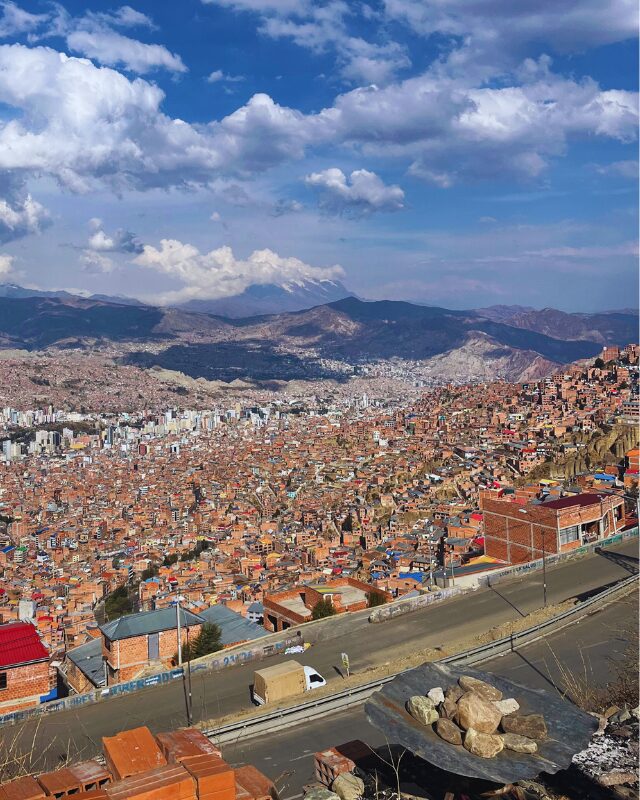
The flight to this unusual metropolis is an adventure in itself. I remember exactly how I pressed my nose flat against the window when the barren Andes stretched endlessly to one side, and in the distance, I spotted snow-covered peaks. Just minutes later, I had the most surreal view: a sprawling metropolis nestled inside a giant bowl of mountains.
La Paz is served by El Alto International Airport, located at an incredible 4,061 meters (13,325 ft) above sea level. It’s one of the highest airports in the world, so don’t be surprised if you already feel the altitude the moment you step off the plane.
I recommend booking a pickup service in advance. After winding our way through the chaotic traffic of El Alto, we reached the road that descends nearly 500 meters into the valley where La Paz lies. It was dark by then, and only the full moon illuminated the sky. The view of the city lights sparkling below us was absolutely magical.
How Many Days in La Paz
If you’re wondering how long to stay, I’d recommend at least 2 days in La Paz. While Bolivia’s main highlights are often found in its landscapes, like the Uyuni Salt Flats or Lake Titicaca, you shouldn’t skip its unique capital. Two days give you enough time to experience the city’s mix of traditions, modern transport system, and surreal surrounding nature.
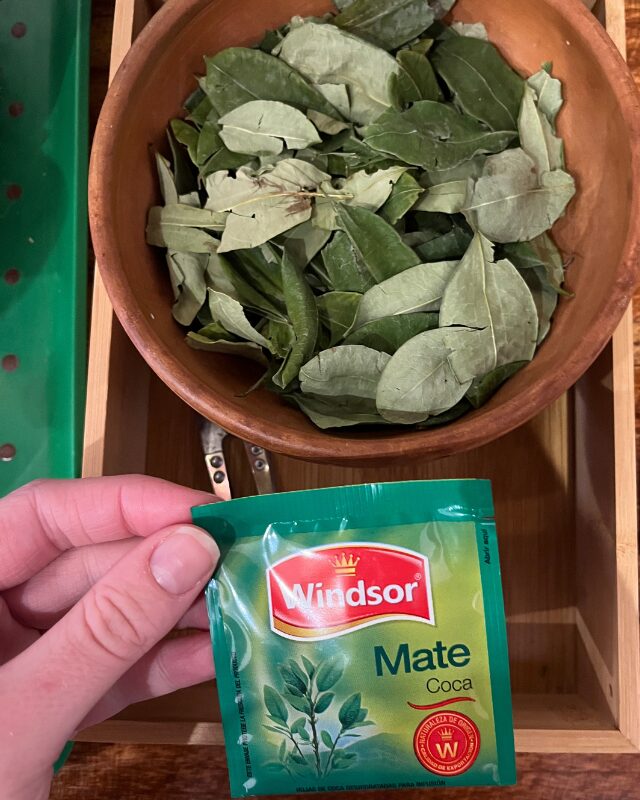
As for the altitude, it’s wise to take things slow. During my trip to Peru and Bolivia, I drank coca tea every day. It’s a traditional remedy used in the Andes for over 3,000 years. The coca leaves help avoid altitude sickness, hunger, and fatigue, and they’re still an essential part of daily life for many Bolivians and Peruvians.
Where to Stay in La Paz
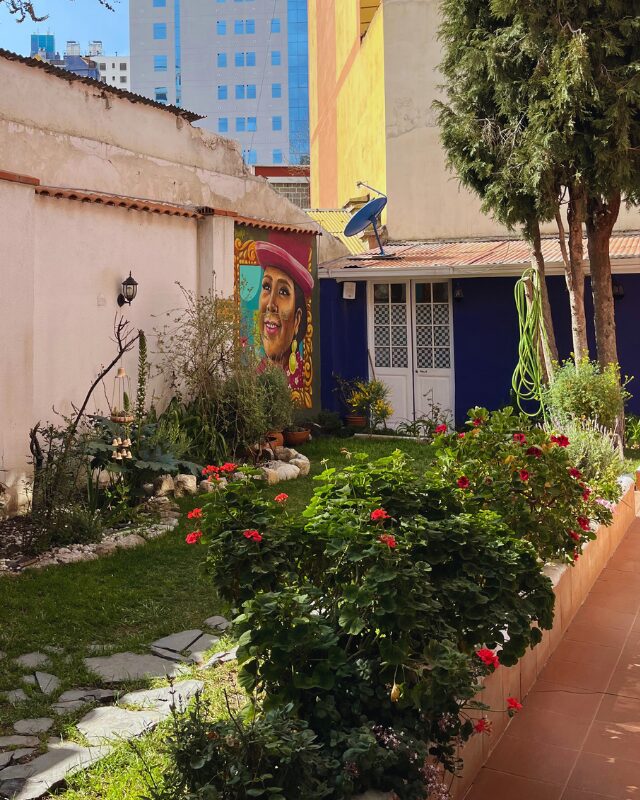
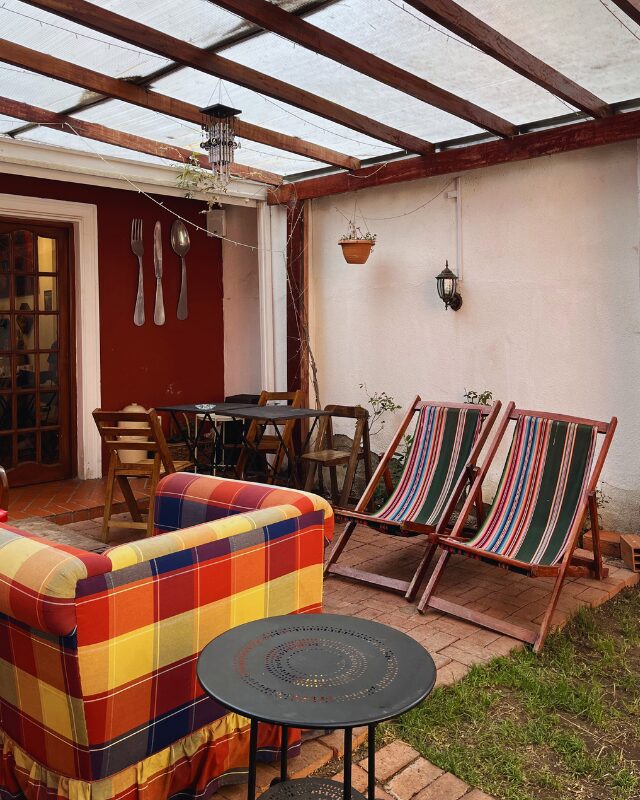
I stayed at Anami Hotel Boutique, a charming little place run by Rosa, an elderly lady who greeted me warmly at the reception. To my surprise, she spoke fluent English and happily shared stories about her city.
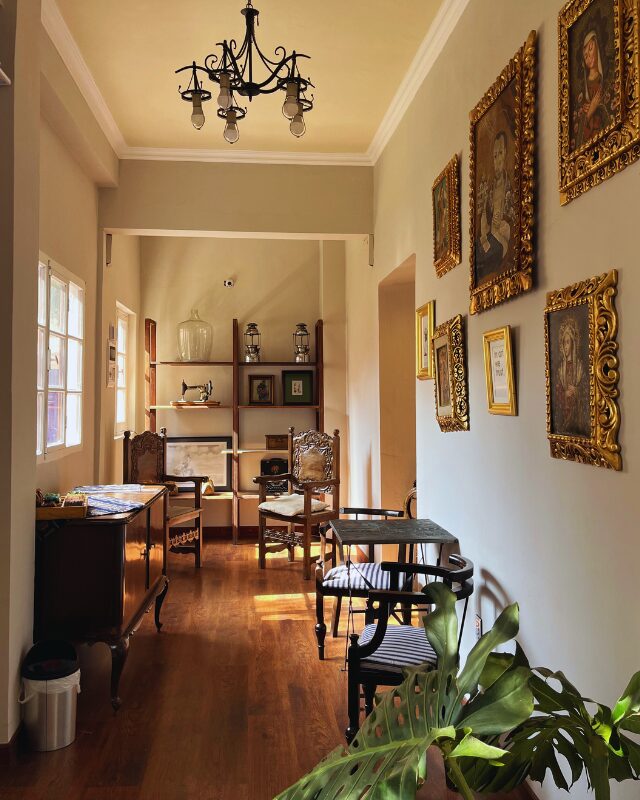
The hotel itself is tucked away in a quiet neighborhood, so it felt safe and peaceful despite being just a short taxi ride from the busy city center. I especially loved the personal touches, like handmade decorations, and Rosa’s genuine interest in her guests. It didn’t feel like staying in a hotel, but more like visiting family.
The rooms were cozy (and much warmer after turning on the heater), and on the same property, there was even a small French restaurant. I treated myself to savory crêpes on the first night – a true comfort food after a long journey. Breakfast was another highlight, with fresh rolls that reminded me of home in Germany.
2-Day La Paz Itinerary
Here’s how I spent my 2 days in La Paz – a mix of cultural experiences, stunning viewpoints, and fascinating local traditions.
Day 1: Panoramic Views, El Alto & Historic Center
I started the morning slowly and saved my energy for the afternoon. At 3 pm, I joined a walking tour with Valeria, a 22-year-old student who became my guide. Walking tours in La Paz are one of the best ways to explore the city and learn about its history and culture.
Viewpoint & Introduction to the City
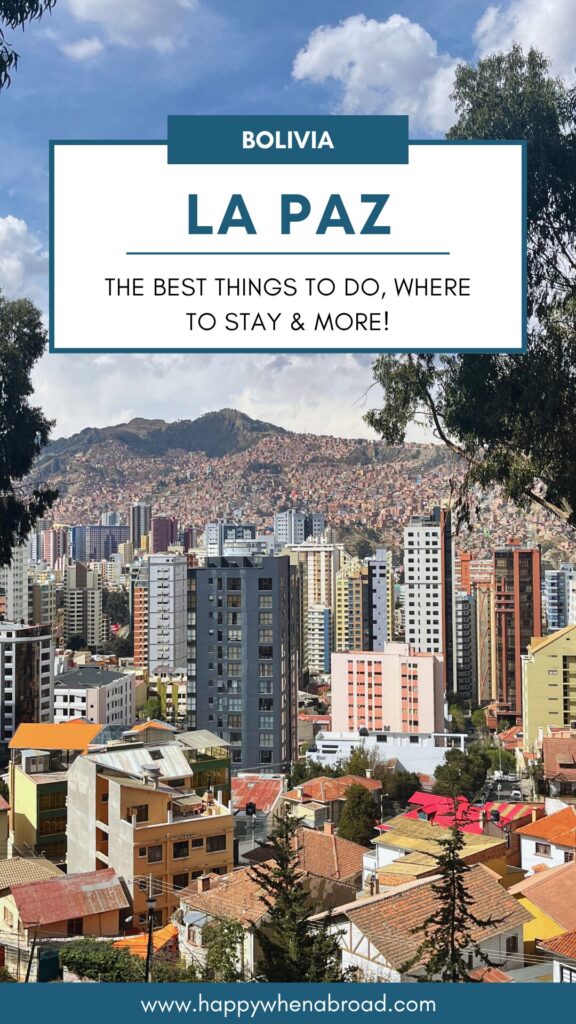
Our first stop was a viewpoint overlooking the city. From here, we had a panoramic view of La Paz and its famous cable car system (Mi Teleférico), which has become the main mode of transport since it was built just over a decade ago.
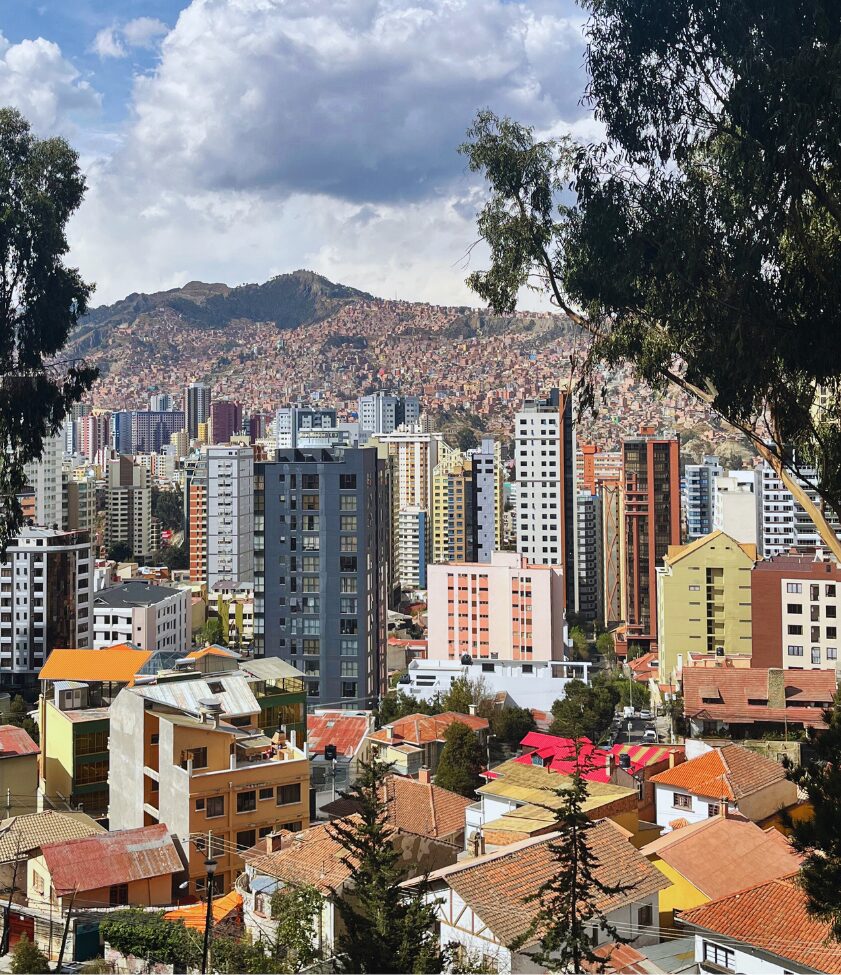
Valeria explained that La Paz sits in a natural bowl, surrounded by mountains. Looking out, it almost felt like being on the moon, with bare peaks framing the city. We also visited a nearby church, where she told us that locals prefer getting married on even-numbered dates, as they believe happiness is easier to share that way.
El Alto & the Giant Market
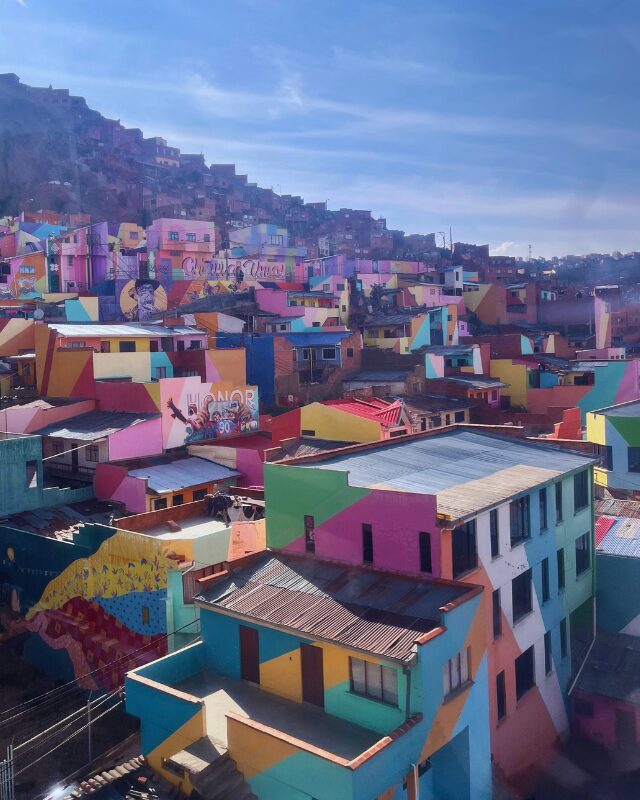
To reach El Alto, we hopped on two cable car lines, enjoying incredible views during the ride. Taking the cable car is one of the best things to do in La Paz. Valeria explained that the higher we went, the poorer the neighborhoods became. Some houses were built precariously close to cliffs, where landslides during the rainy season often sweep them away.
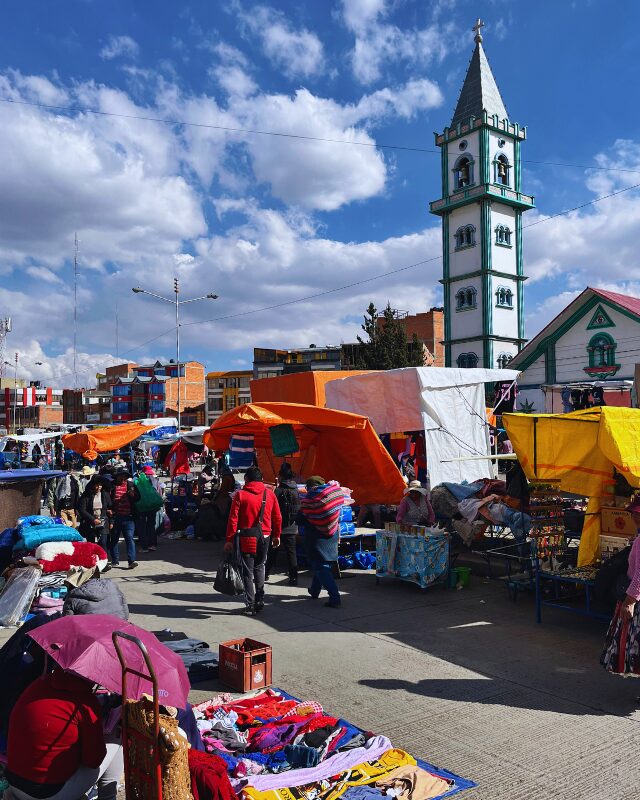
When we arrived in El Alto, we stepped into a massive market that seemed to stretch forever. You can literally buy anything here – clothes, animals, car parts, toys, even toilets. Valeria joked that if someone steals your phone in La Paz, you’ll probably find it for sale here the next day.
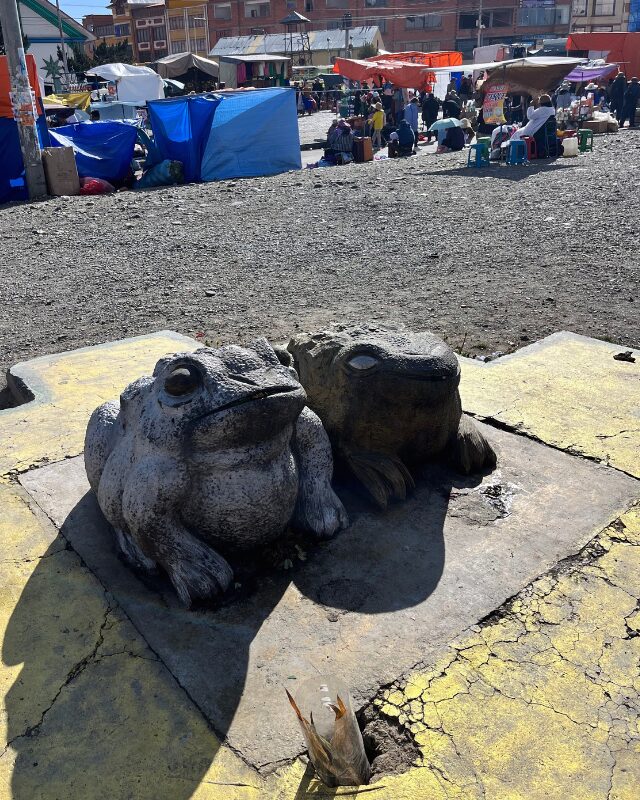
We also learned a lot about local traditions. At one spot, two stone frogs stood as symbols: the smaller female frog represented love and fertility, while the larger male frog symbolized wealth. Locals leave coca leaves or even cigarettes as offerings, depending on what they wish for. Following the custom, Valeria handed us coca leaves, and we left our little offering.
On the way back down, Valeria introduced us to another ritual that shocked us: many families keep human skulls (known as ñatitas) in their homes as good luck charms. These skulls often come from abandoned graves when families can no longer pay cemetery fees. Each skull is chosen depending on the blessing someone seeks – for example, a former policeman’s skull if you want protection. It sounded surreal to us, but for many Bolivians, these traditions are deeply meaningful.
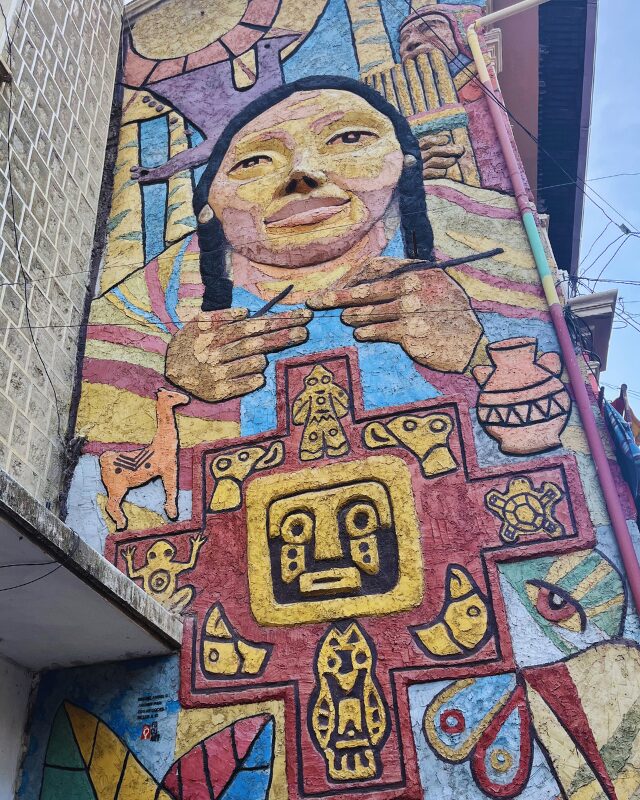
The Historic Center
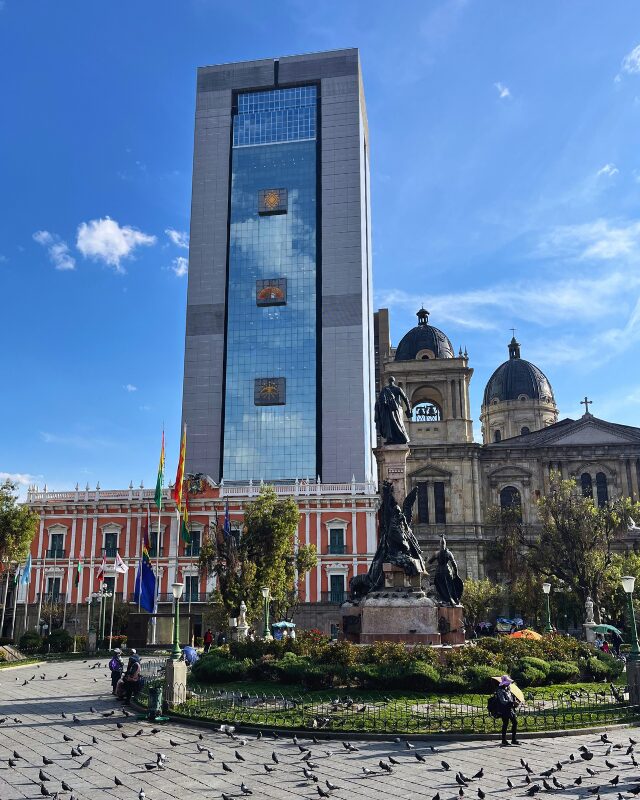
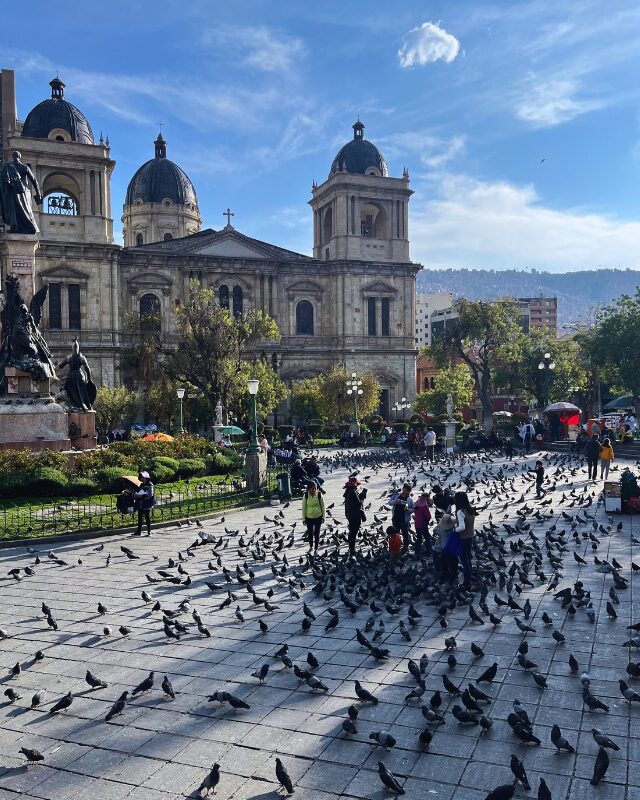
Back in the city center, we visited Plaza Murillo, the heart of political life in La Paz. The square is surrounded by some of the city’s most important buildings, including the Presidential Palace, the National Congress, and the Cathedral of La Paz. Locals and tourists gather here, and it’s common to see groups of people sitting on benches while feeding the pigeons.
Valeria spoke openly about Bolivia’s turbulent political history and her concerns about election fraud, sharing stories of how votes are sometimes cast in the names of the deceased. It was eye-opening to hear such personal insights while standing in the very place where so many historic decisions have been made. Beyond its politics, the historic center is also filled with colonial-era architecture, narrow streets, and lively plazas, making it a fascinating area to explore on foot.
Day 2: Valle de la Luna & the Witches’ Market
On the second day, I combined nature and culture. The morning was dedicated to exploring the otherworldly landscapes of Valle de la Luna, while the afternoon took me deep into the spiritual world of Bolivia at the Witches’ Market.
Valle de la Luna
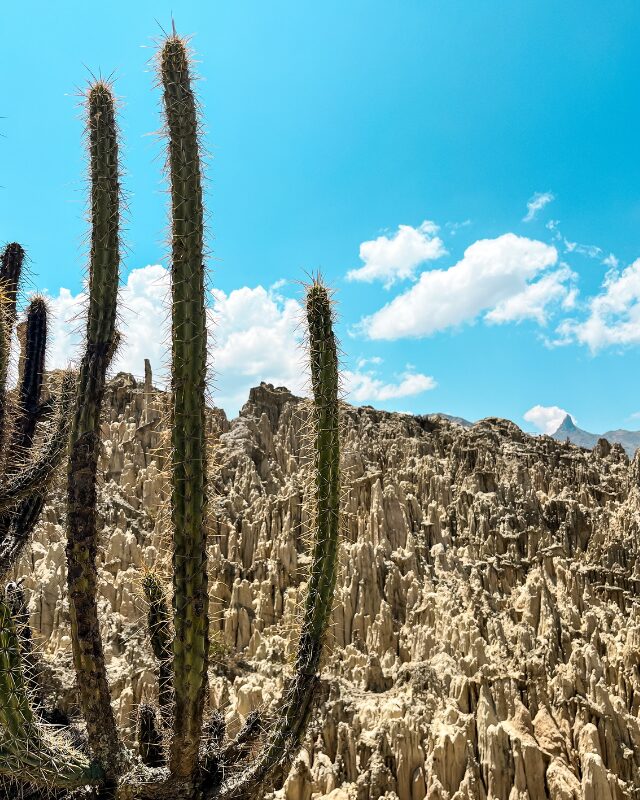
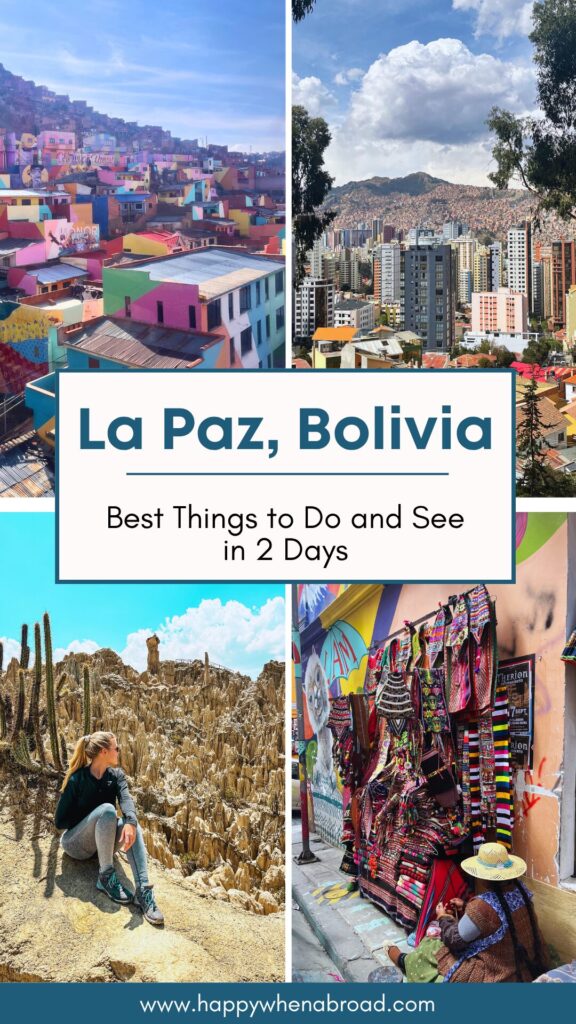
I took a taxi about 7 km outside the city to Valle de la Luna (Moon Valley). This natural wonder is the result of thousands of years of erosion, leaving behind deep canyons, spires, and clay formations that look like they belong on another planet. Legend has it that Neil Armstrong himself gave the valley its name when he visited and remarked on its similarity to the moon’s surface.
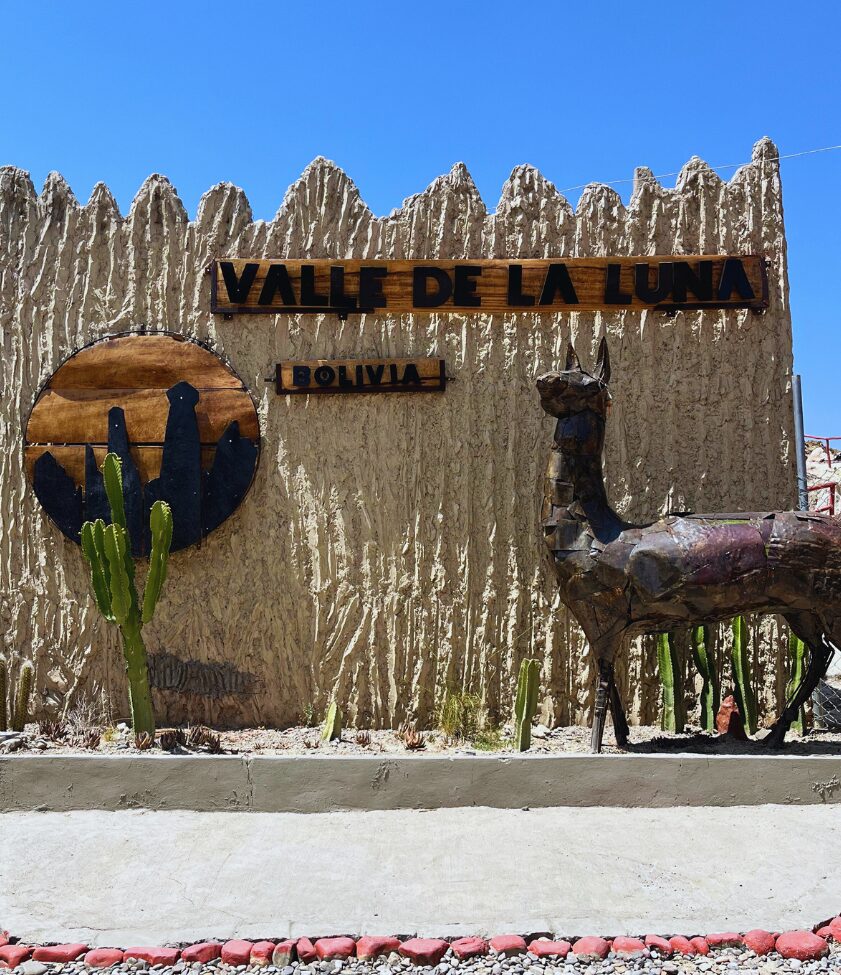
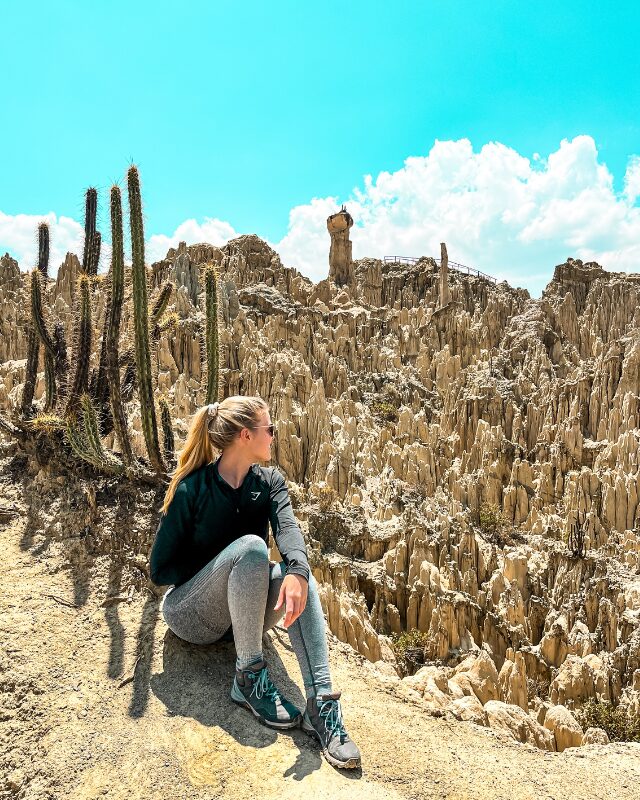
There are two marked trails here, one about 30 minutes long and the other about an hour long. I chose the longer route, stopping often to take photos and admire the bizarre shapes created by wind and rain over time. With hardly any vegetation except for a few cacti, the valley felt eerily silent and empty – almost as if time had stood still.
One of the highlights was reaching viewpoints where you could look across the entire valley and see the clay spires stretching endlessly into the horizon. The paths are easy to follow, and several platforms and bridges make the walk accessible and safe. Visiting Valle de la Luna was a peaceful contrast to the chaos of the city and definitely one of the most unique landscapes I’ve ever seen.
The Witches’ Market
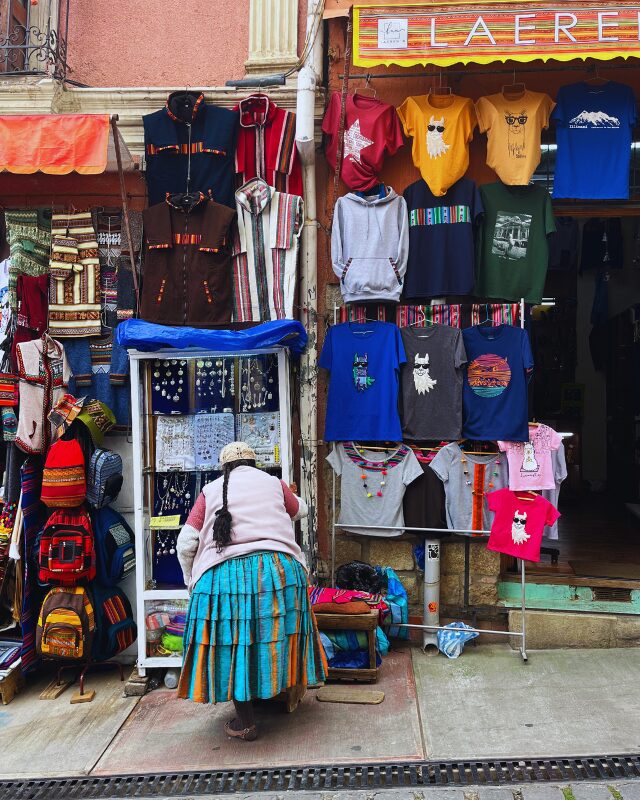
In the afternoon, I explored the famous Witches’ Market (Mercado de las Brujas) back in central La Paz. At first, I thought the name was just a playful exaggeration, but it turned out to be quite literal.
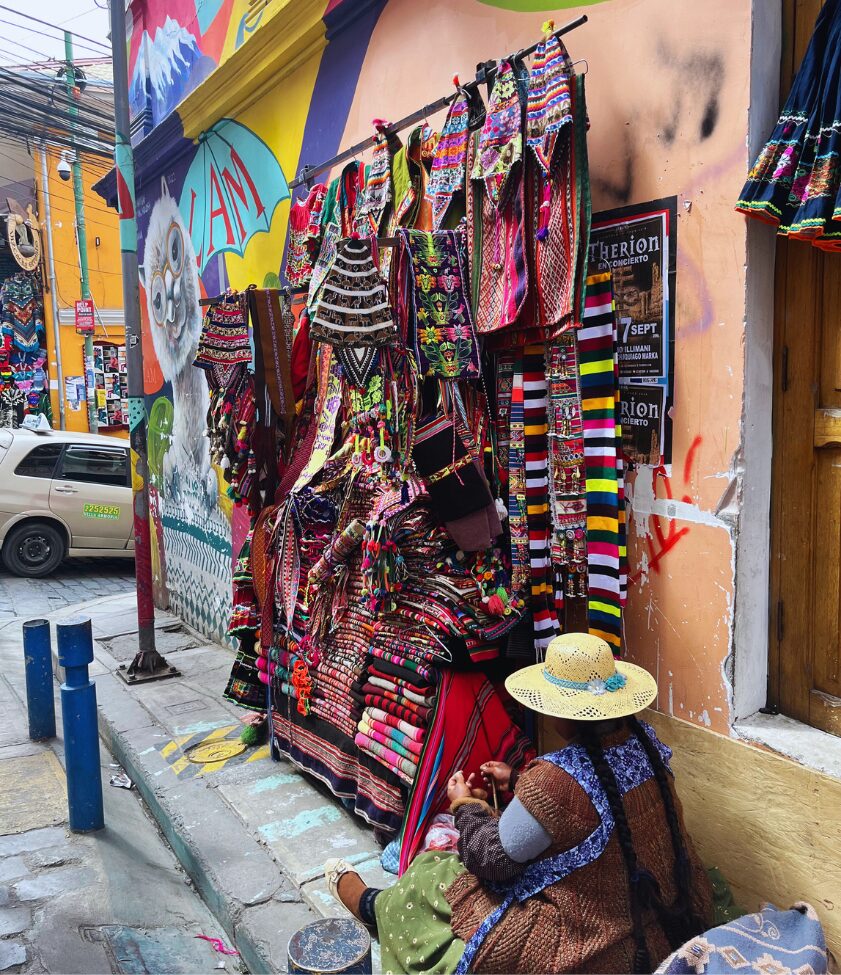
About 60% of Bolivia’s population identifies as indigenous (mostly Aymara and Quechua), and many still honor Pachamama (Mother Earth) through spiritual rituals. On the market, you’ll find everything from candles and coca leaves to llama fetuses, which are offered in sacrifices to bless new houses or businesses.
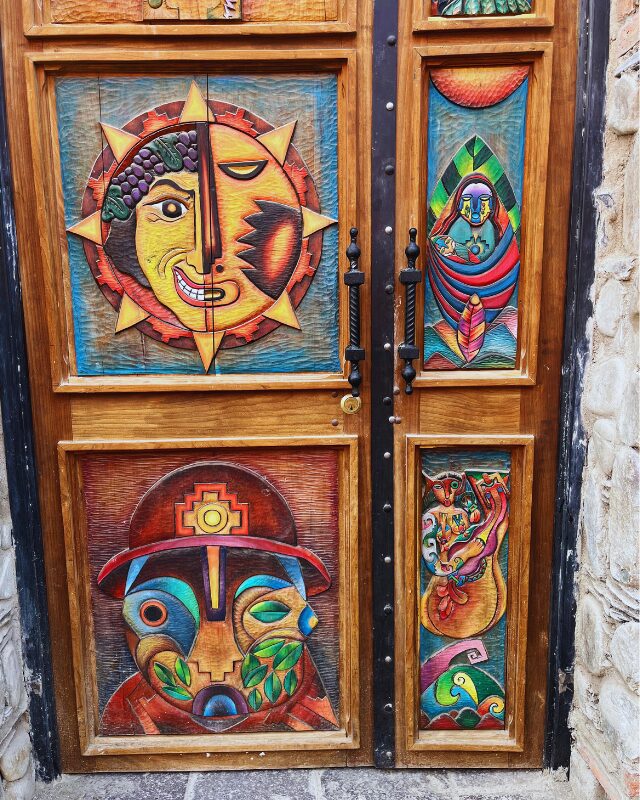
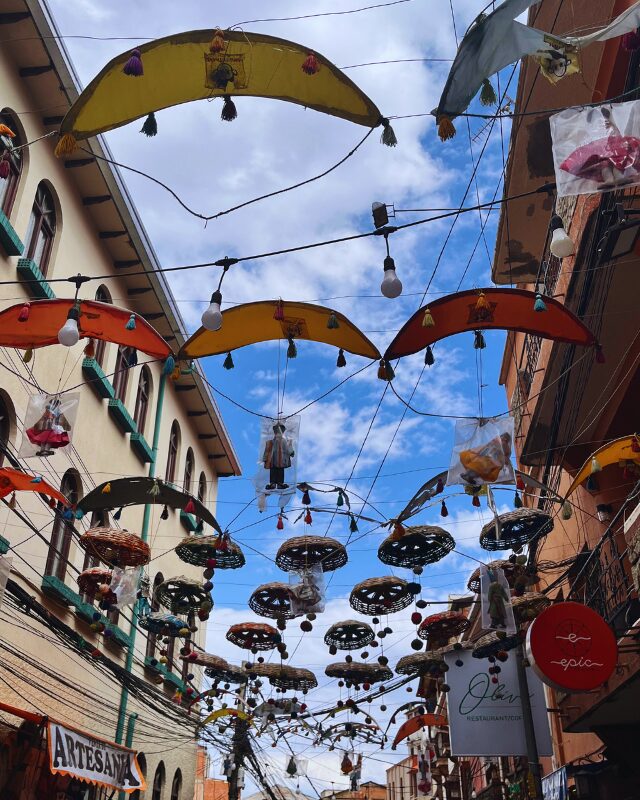
A local woman explained the ritual in detail: people prepare a small “wish package” with drawings or symbols of what they want – money, a car, a house – then add coca leaves, candies, and sometimes a llama fetus before burning it. It may sound shocking, but these traditions are taken very seriously and are deeply tied to faith and community life.
The market also sells colorful textiles, clothes, and souvenirs, so it’s worth visiting even if you just want to buy souvenirs. For me, it was the perfect ending to my 2 days in La Paz.
Final Words
Spending 2 days in La Paz was an unforgettable experience. From riding the colorful cable cars and exploring the chaotic streets of El Alto to walking through moon-like landscapes and discovering age-old rituals at the Witches’ Market, this city is unlike anywhere else in the world.
If you’re planning a trip to Bolivia, don’t skip La Paz. This 2-day La Paz itinerary is the perfect way to dive into the culture, traditions, and fascinating contrasts of the world’s highest capital city.
Don’t forget to save this itinerary for your 2 days in La Paz!

Beautifully crafted itinerary—this guide perfectly captures the raw charm of La Paz, blending culture, surreal landscapes, and unique local traditions!
Where have you found your tour guide? Give me please her contact🙏
I booked the tour on the platform GuruWalk 🙂
Your student led walking tour sounds excellent–so many insights into the local customs and culture. What a great way to get introduced to the city.
Bolivia is on my list to visit! You took beautiful photos. I’d love to see the witches market and find everything from candles and coca leaves (yes) to llama fetuses (no!).
I absolutely adored this colorful and culturally rich city. Your photos are beautiful. I added several days for altitude adjustment. Such an unexpectedly fabulous place.
Great guide! I would love to visit La Paz solely to soak in the culture.